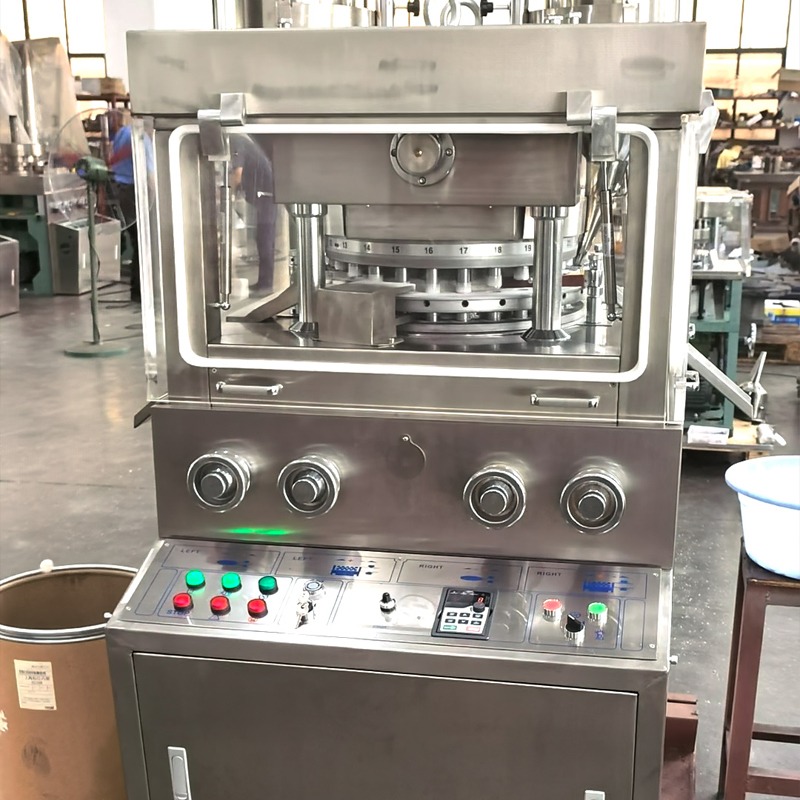
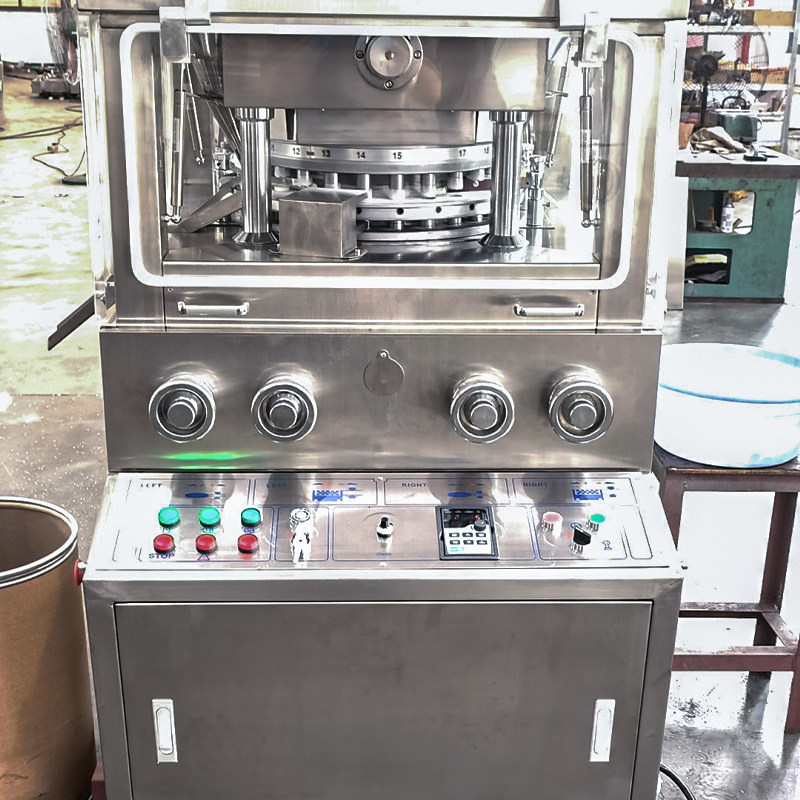
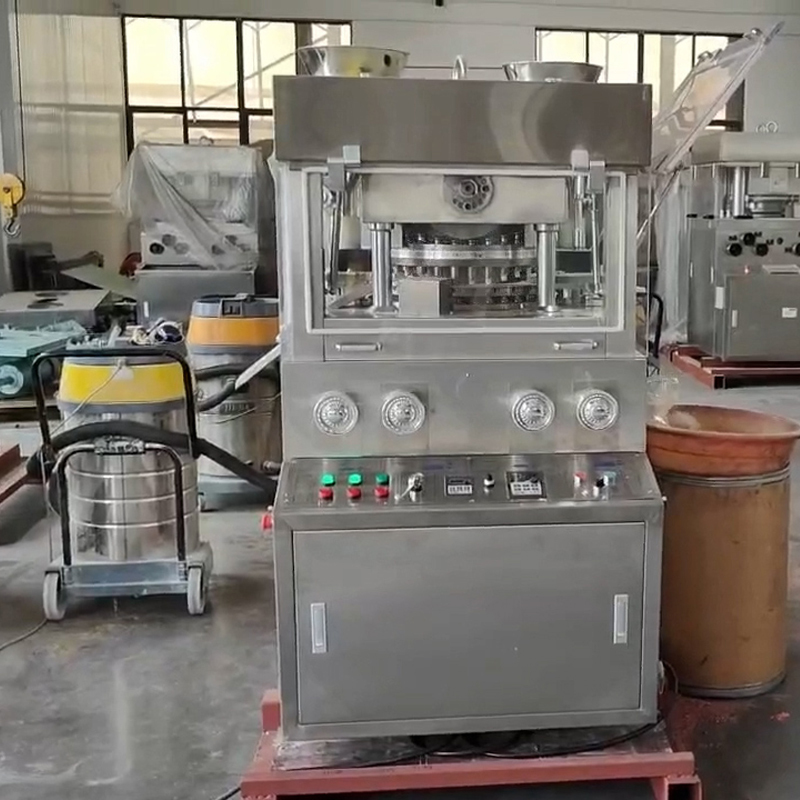
The ZPW Series Double Rotary Tablet Press is designed for reliable production of standard and bilayer tablets. Available in multiple models, it delivers stable compression, high output and GMP-compliant performance for pharmaceutical, nutraceutical and food manufacturing. Built to meet GMP requirements, the machine features precision mechanical transmission, PLC control and user-friendly operation to ensure consistent performance during long production runs. It supports round, irregular, engraved and bilayer tablet production with excellent weight and hardness consistency. Whether expanding an existing production line or building a new tablet manufacturing facility, the ZPW Series provides a dependable solution for efficient tablet compression and scalable production.


✔ High production capacity for continuous manufacturing
✔ Double compression system for improved tablet hardness and weight consistency
✔ GMP-compliant stainless steel construction for easy cleaning
✔ PLC touch-screen control with simple parameter adjustment
✔ Compatible with various punch tooling standards
✔ Suitable for pharmaceutical, nutraceutical, food, veterinary, and chemical industries
✔ Stable operation with low maintenance requirements
✔ Optional automatic feeding and dust collection systems

The machine is widely used for manufacturing:
l Pharmaceutical tablets
l Vitamin tablets
l Calcium tablets
l Herbal medicine tablets
l Milk tablets
l Candy tablets
l Effervescent tablets
l Veterinary tablets
l Disinfectant tablets
l Catalyst tablets

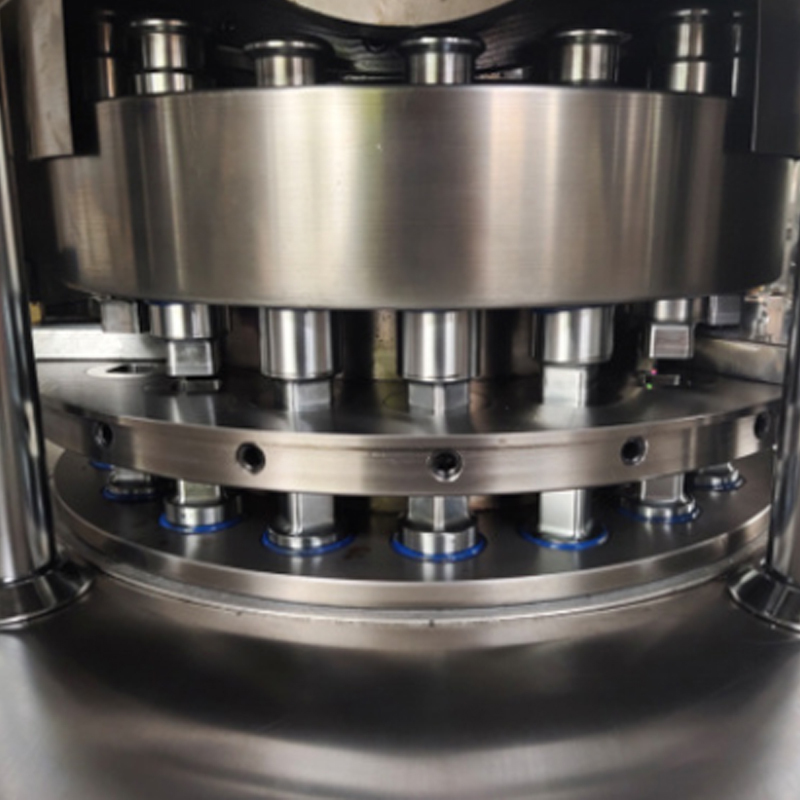
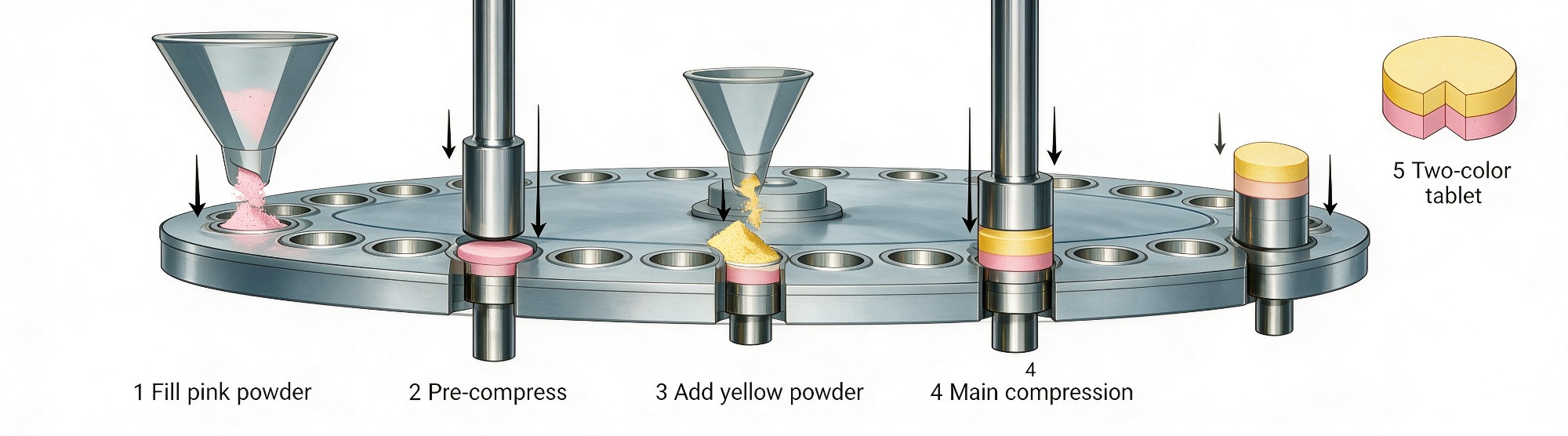
The ZPW Double Press Rotary Tablet Press adopts a double-compression structure designed for manufacturing bilayer tablets with stable quality and high production efficiency. The machine is equipped with two independent feeding systems and two compression stations, allowing two different powder materials to be compressed sequentially into a single tablet.
The compression process consists of four steps:
1. First Layer Filling – The first material is fed into the die cavity and pre-compressed to form a stable tablet core.
2. Second Layer Filling – The second material is filled onto the first compressed layer through the second feeding system.
3. Main Compression – The two layers are compressed together under the main pressure rollers to create a firmly bonded bilayer tablet.
4. Tablet Ejection – The finished tablet is ejected from the die and transferred to the discharge system.

|
Model |
Stations |
Max. Output |
Max. Tablet Ø |
Max. Thickness |
Max. Pressure |
|
ZPW-25 |
25 |
90000 tablets/h |
25 mm |
6 mm |
80 kN |
|
ZPW-29 |
29 |
125000 tablets/h |
24 mm |
6 mm |
80 kN |
|
ZPW-31 |
31 |
135000 tablets/h |
22 mm |
6 mm |
80 kN |
|
ZPW-19D |
19 |
20500 tablets/h |
40 mm |
15 mm |
100 kN |
|
ZPW-21D |
21 |
25500 tablets/h |
40 mm |
12 mm |
100 kN |
l One main machine with enclosed force feeder
l One set of round dies (customizable patterns and shapes available)
l One vacuum cleaner
l One set of routine maintenance tools
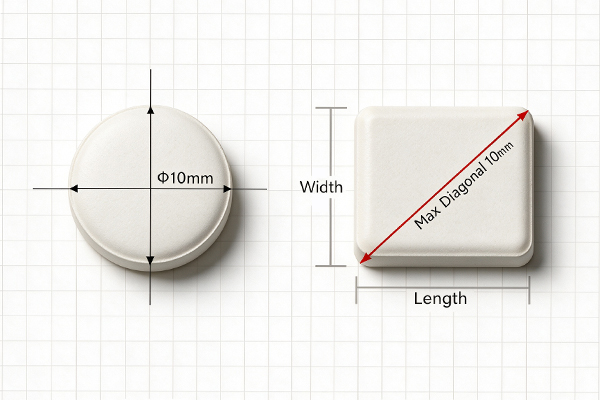
Generally speaking, the following parameters need to be confirmed for model selection:
① Confirm whether your powder is suitable for tableting.
② Diameter of round tablets (the maximum diagonal length shall be provided for special-shaped tablets).
③ Required tablet thickness.
④ Required production capacity.

|
Equipment |
Function |
|
Uniform powder mixing |
|
|
Vacuum Feeder |
Automatic powder feeding |
|
Tablet Press |
Tablet compression |
|
Remove tablet dust |
|
|
Metal contamination detection |
|
|
Automatic tablet counting |
|
Material |
Suitable |
|
Pharmaceutical Granules |
✔ |
|
Vitamin Powder |
✔ |
|
Calcium Carbonate |
✔ |
|
Herbal Extract Powder |
✔ |
|
Effervescent Granules |
✔ |
|
Candy Powder |
✔ |
|
Veterinary Formulations |
✔ |
1. Dry Powder
Raw materials must be fully dry, with moisture content controlled below 5%.
2. Flowability
Materials shall have good flow performance. The ideal particle fineness for tableting ranges from 20 to 60 mesh, with a small proportion of fine powder mixed in for optimal results. If the material has poor flowability, granulation treatment is recommended. For detailed operations, please refer to our Granulation Guide.
3. Adhesiveness
Adhesiveness refers to the property that powder can agglomerate and bond together under external pressure. Materials lacking natural adhesiveness need binders to improve forming performance, such as maltodextrin, sugar, starch, microcrystalline cellulose, etc.
4. Low Oil Content
Excessive oil inside raw materials will severely hinder tableting forming. Therefore, the material cannot contain high levels of grease.
Q1: How long is the warranty period of the tablet press?
A1: The machine enjoys a one-year warranty (excluding wearing parts).
Q2:What are the main wearing parts of this machine?
A2: Main wearing parts include punches, dies and sealing parts. Spare parts can be supplied separately.
Q3: How long is the delivery lead time after order confirmation?
A3: Normally the delivery time is 15–30 working days, subject to machine configuration.
Q4: What voltage can the equipment support?
A4: We can customize the voltage and frequency according to local power standards of your country.
Q5: Will two-color tablets peel off between layers?
A5: Proper formula and adjustment of pre-compression force can effectively avoid delamination.
l How to Adjust Pre-Pressure and Main Pressure for Perfect Tablet Compression?
l Tablet Sticking Problems? Step-by-Step Troubleshooting Guide